
FREQUENTLY ASKED QUESTIONS
Patients, families and carers – FAQ
Honest answers to the questions people most often bring when the medication side of ADHD, autism or mental health care feels confusing, overwhelming or stuck. Take what is useful. Ignore what is not.
Understanding what Maxwell Minds™ does
In short
If you are not sure what this service is or whether it could help you, start here. This section explains what Maxwell Minds™ is, what Penny actually does in practice, and how to get started.
What is Maxwell Minds™?
Maxwell Minds™ is an independent specialist medication consulting service for people navigating ADHD, autism and mental health medications. It was started and is led by Penny (Penelope) Maxwell – a Pharmacist Consultant in both Mental Health and Paediatrics – one of only two in Australia to hold dual recognition at this level, and the only one in private practice. View credential → Maxwell Minds sits outside the hospital system and has no pharmaceutical company relationships or institutional agenda.
What does Penny actually do?
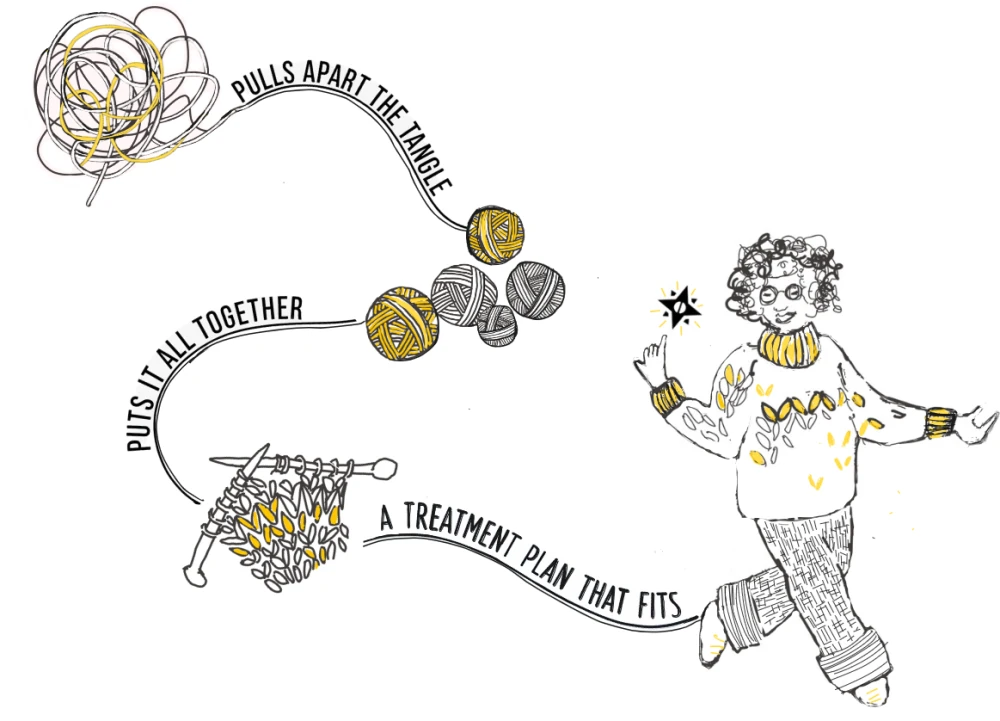
Penny looks at the medication side of your care – and everything around it that affects whether it works. That includes how a medicine moves through your body, what the evidence says, how it interacts with other medicines or health conditions, what might be missing, whether treatment fits your life, whether it is safe, and whether it is as simple as it can be.
In practice that means different things for different people. For some it is education. For others it is navigation – working out what the system offers and what is possible. For others it is advocacy and facilitation – making sure your goals are heard and that you understand what your treating team is proposing. And for many it is collaboration – working alongside your treating team so everyone is operating from the same picture.
She does not prescribe or diagnose. All prescribing decisions remain with your treating clinician.
Why does this service exist?
The medication side of ADHD, autism and mental health care is complex. Evidence keeps moving. Systems are hard to navigate. What works for one person rarely works for another. And the standard clinical encounter rarely has enough time to go as deep as complex situations require. Maxwell Minds™ exists to fill that gap – with specialist expertise, time, and independence.
Do I need a referral?
No. You can contact Maxwell Minds™ directly. If your doctor or specialist has referred you, that is also welcome. Either pathway works.
Is this right for me
In short
Not sure if this service fits your situation? This section gives you a straight answer – who is likely to benefit, who is not, and what to do if you are unsure.
Maxwell Minds™ is likely to be a good fit if…
- Several medications have been tried with limited benefit or difficult side effects
- You are on multiple medications and worried about interactions or long-term effects
- You are neurodivergent and feel past care has not properly understood your needs
- You and your treating team feel stuck and are not sure what to try next
- Standard appointments have never been long enough to do justice to your situation
- You have just received a diagnosis and want to understand your options before deciding anything
- You have strong or complicated feelings about medication and want honest, independent information
- Someone important to you does not understand the treatment picture and it is affecting what is possible
Maxwell Minds™ may not be the right fit right now if…
- You are starting your first standard medication and things are going smoothly
- Your situation is responding well to current care and you feel confident in it
- You primarily need a diagnosis, a prescriber or a therapist – we do not provide those services, though we can help you find them
- You are in crisis and need urgent support – please contact your treating clinician, a crisis line, or your nearest emergency department
Penny's role
In short
This section covers what Penny does and does not do, her qualifications, and why her background is unusual.
Does Penny prescribe?
No. Penny is a clinical pharmacist, not a prescriber. She provides expert independent advice about medication – the options, the evidence, the interactions, the safety considerations, and how to get the most out of treatment for your specific situation. All prescribing decisions remain with your treating clinician.
Does Penny diagnose?
No. Diagnosis sits with a medical practitioner. Penny works with whatever stage you are at – questioning, self-identified, or formally diagnosed – to support the medication side of your care. You do not need a diagnosis to come.
What is Penny's background?
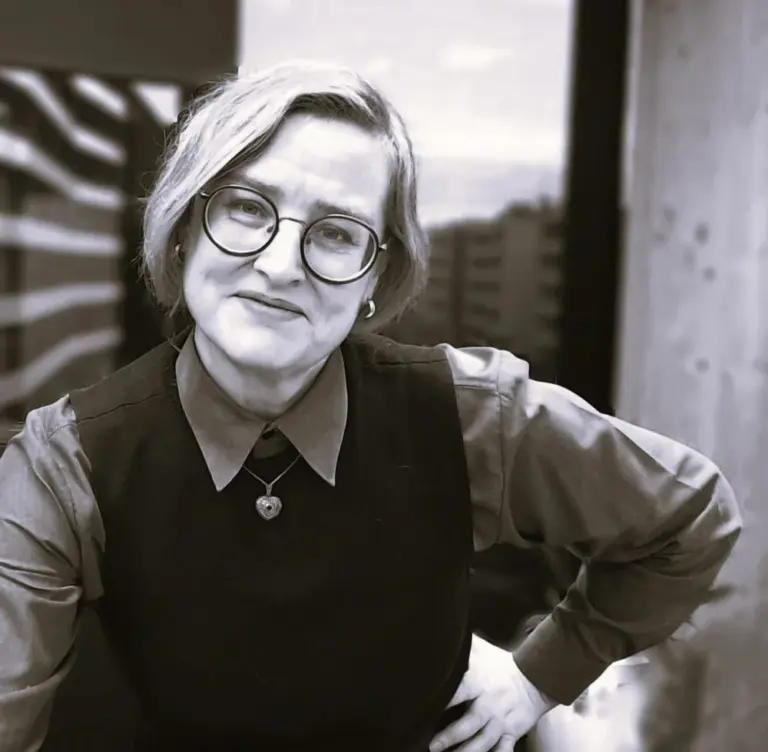
Penny (Penelope) Maxwell is Pharmacist Consultant in both Mental Health and Paediatrics – one of only two in Australia to hold dual recognition at this level, and the only one in private practice. View credential → She is lead author of the Child and Adolescent chapter of the Maudsley Prescribing Guidelines (8th edition) – the global reference text for mental health prescribing, translated into 19 languages. She wrote the Knowledge and Skills component of the SHPA Training Residency Framework for Mental Health – the official accredited advanced practice program for specialist mental health pharmacists across Australia. She has 20+ years of frontline experience in mental health, paediatrics and ADHD. She has lived experience of late ADHD diagnosis and has personal reasons for the work she does.
How sessions work
In short
This section covers what happens in a session, what you need to bring, what forms you will be sent, how your information is kept safe, and where to find the privacy policy.
What does a session look like?
Sessions are focused conversations about your medication situation. The aim is to understand what is not working, what might be missing, and what needs attention – without reviewing your whole life history in one go.
The session includes:
- Clear, focused questions with space to voice concerns
- Attention to what has helped and what has not
- Discussion about what matters to you and what you want from treatment
- Flexibility in how we meet – online, phone, in person in Newcastle, a walk along Honeysuckle Foreshore, or sitting outside
- Communication tailored to how your brain works – whiteboard diagrams, written notes, plain language, whatever helps
- Sensory needs accommodated as best as possible
- Handouts where relevant
How long does a session take?
Sessions come in three formats. A focused initial consultation runs 30 minutes – one clear question, one clear answer, written summary included. A standard working session is 60 minutes. A longer session runs 90 minutes and includes a 5 to 10 minute break in the middle.
A session is not the same as a comprehensive review. A review may involve one session or several. You decide the scope and the pace. Some engagements involve significant work between sessions – always discussed and agreed with you before it begins. No surprises.
Do I need to prepare anything?
No. You do not need to arrive organised, prepared or with a clear plan. That is part of what the session is for. Many people come feeling lost, exhausted or uncertain. That is fine.
If you don’t have any of the pre session forms filled out that is fine. We will cover it in the session.
We start where you are. If you are all across it and have information ready, that is great too.
There are some forms you might be sent before a session via email or text. It is good if you can fill them in but not essential. See the section below.
What are the forms I have been sent and do I have to do them?
All new clients will be sent a link to the privacy policy and asked to fill in a consent form for how Maxwell Minds™ manages their information. Their loved ones may also be sent a consent for this.
It is essential for the Privacy Consent form to be signed for every patient. This can be done before the session (preferred) or during the session. You can ask a loved one for help with the privacy form, but it is important that only you sign it, or only someone with legal right to sign it for you sign it. For example a guardian, or a parent for children.
You can sign the forms electronically, and you do not need a special program to do it. If you can open the form you can sign it.
We send Easy Read and Plain English versions of the privacy policy so everyone can understand how we use your information and keep it safe.
If you have any questions or concerns, don’t sign the form and either discuss it in your session, or send Maxwell Minds™ an email if you have concerns.
You may also be sent an electronic patient registration form with some questions about your health and medicines. These are usually sent before a 60 minute initial session, but may be sent other times, depending on the situation. This has some questions on it to help Penny have the information at hand during your appointment. It also helps her prepare and means your time together is used well.
If you cannot find the information for this questionnaire, do not have the energy to fill it in, or the whole thing feels too hard right now – do not worry. Penny is expert at piecing together treatment histories and will help you work through it in the session. Do what you can. Leave the rest to her.
Like the privacy form, these forms are electronic and sent via email or text. You don’t need any special computer programs to sign them.
How is my information kept safe? What is your Privacy Policy?
We take personal information seriously.
Please see our most up to date Privacy Policy here. This is regularly reviewed. Let us know if you have any questions or concerns.
Choose the version that works best for you:
- Official Privacy Policy
- Plain English Summary
- Bionic Text Version (some words in bold – easier for some readers)
- Easy Read (very simple text with pictures)
Can I bring someone with me?
Yes. You can bring a partner, parent, family member, carer or whoever is important to you – to the whole session or part of it, whatever feels right. Getting to shared language and shared understanding within a family, chosen family or important relationship is just as important as the alignment between a patient and their treating team.
Medication science
In short
Medication affects people very differently – and there are reasons for that. This section explains why, and the framework Penny uses to make sure nothing important gets missed.
Why does medication work differently for different people?
How a medicine moves through a body varies significantly between people. Genetics, other health conditions, other medications, age, gut health and many other factors can change how much of a medicine is absorbed, how it is broken down, where it goes, and how it leaves the body. This explains a lot of apparent treatment failures that were never actually failures – they were the wrong dose, the wrong form, or the wrong context for that person’s body.
What is MEDWISE™?
MEDWISE™ is the clinical framework Penny uses to think about every patient’s medication situation. It works through seven dimensions – Movement (how the medicine moves through your body), Evidence, Drug interactions, What’s missing, Individual fit, Safety, and Efficiency. It is a structured way of making sure nothing important is missed. Not a checklist – the full depth of specialist pharmacist training applied to one person’s specific situation.
M – E – D – W – I – S – E | Seven dimensions. Every patient. Every time.
M Movement – how this medication moves through your specific body. What is changing absorption, metabolism and excretion for you.
E Evidence – what the research actually says – including where it is uncertain or does not apply to the person in front of her.
D Drug interactions – with other medications, conditions, genes and lifestyle factors.
W What’s missing – the monitoring not in place. The coordination gap. The practical support you are not getting.
I Individual fit – treatment shaped around your body, your history, your values, your practical life.
S Safety – how to start, what to watch for, when and how to adjust, and how to stop or change safely.
E Efficiency – the most elegant solution for this situation. Reducing wasted time and unnecessary complexity.

Neurodivergence, executive function and how the service works
In short
Penny works with a lot of neurodivergent people – and people who think they might be. This section covers what neuroaffirming actually means in practice, how executive function affects medication, what hormones have to do with it, and whether you need a diagnosis to come. Mental illness and neurodivergence often overlap, and where that is relevant to treatment it is covered here too. How any of this applies to you specifically is something Penny works through with you when you see her.
Does being neurodivergent change how Penny approaches your care?
Yes and no. Penny assumes everyone might have neurodivergence, diagnosed or not, or needs that require some adjustment. One size does not fit all. Anyone who is stressed, unwell, or managing mental illness can experience challenges that look a lot like what neurodivergent people live with every day.
That said, there are things more common in neurodivergence – unique sensory profiles, individual ways of responding to medication, hormone considerations, connective tissue issues – and Penny actively looks for these. When you have met one person with autism, you have met one person with autism. Fully personalising treatment to the individual is not an add-on. It is how Penny works, and what seeing Penny is all about. She is a big nerd about the science and practice of this exact thing.
Neurodivergence is not an illness. It is not a problem to be fixed. It is a different way the brain works. Penny works backwards from what you want – what do you want to get out of life? From there she works with you and your team to see whether medication is going to help or hinder that. Not changing who you are. Helping you get the capacity to pursue what matters to you.
Because it is not fair that someone who appears to be doing okay is left without support – when what nobody sees is that they are using everything just to mask, and going home to collapse, or melt down.
Getting the medication right is sometimes essential, but never the whole solution. Every situation is different. Seeing Penny is about finding the best fit for you.
What does neuroaffirming actually mean in practice?
It means the solutions are designed around how your brain and body work – not the other way around.
Before your appointment, Penny asks about your sensory needs and communication preferences.
In sessions she often draws things out – diagrams, timelines, the body – to go with the talking. Fidgets are there for everyone for in-person sessions. Need to stand up or move around? No problem. Need to draw to pay attention? No problem. Plain English is the default for all written communication.
Sessions can be online, in person in Newcastle (or Canberra soon), walking along Honeysuckle Foreshore, or outside (if possible). You do not need to arrive organised or articulate. You do not need the right words. That is part of what the session is for.
If you arrive well prepared – including with things you found online or through AI – that is great too. Penny is interested in what you have found and what you think about your own brain and body.
Wherever possible, you can choose how much or how little detail you want to go into.
You do not have to act a certain way in the session. If you get excited, that is fine. If you are emotional, that is fine. If you talk really loud, Penny has noise dimming ear inserts – so go for it. If you want her to speak softer, let her know. We can have a hand signal if that helps. If you cannot remember to brush your teeth, Penny will not judge that. There are no questions too weird or too wonderful here. You will not be too much or too little.
Penny knows that many people – particularly some people with autism – prepare carefully before appointments. This FAQ page has been written with that in mind. Before your session you will receive information about what to expect, and a photo of the meeting space is coming to the website soon – so you can go as deep as you need to before you arrive.
Tell Penny what works for you, what is not working, what you wish was here on the webpage, or in the communication, or if you are interested in joining the patient advisory group we are building. She wants to know. Please get in touch.

What does executive function have to do with medication?
A lot. In how a medicine helps, how some medicines can get in the way, and whether medication gets taken at all.
A lot of the solutions offered to people with ADHD depend on exactly the things ADHD makes hard. It is a bit like saying to someone who cannot hear – ‘I can help you, just listen to this.’ Organising appointments, managing scripts, dealing with overwhelm, keeping records you can use, remembering tablets – these are all executive function tasks.
People with autism often have executive function challenges too. That is part of how their brain works. Mental illness can affect planning and memory. So can stress and menopause. Almost everyone Penny works with needs solutions that fit how things actually are for them – not how they are supposed to be. That almost always includes thinking about executive function.
Most people come and see Penny because they are looking to make progress in mood, thoughts or behaviour.
Executive function covers more than you might think. Big emotions, feeling things more intensely, sensitivity – these can all connect to executive function, or to something else, or both. When you think about these things in neurodivergence, you have to think about executive function too. When you think about the medications and the impact they might have, you have to try and tease out what is what.
As Professor Russell Barkley explains, executive function challenges mean there often isn’t a problem understanding what is important, it is doing what you know is important, even when it’s not interesting, or urgent.
The gap between knowing you should take your medication and actually doing it – every day, without forgetting, without stopping, having the medications there to take, or having the letter you need – is not a motivation problem. It is not a character problem. It is an executive function problem. It needs the right scaffolding, not more willpower. Penny doesn’t want anyone to feel guilty, ashamed or lazy if they can’t manage a system not built for their brain. She will do whatever she can to help find the right scaffolding to meet the executive function challenges head on.
Penny can also talk you through how medicines can affect executive function – for better or worse – and what else plays into it, like sleep and stress.
What is the difference between an interest-based and an importance-based nervous system?
Most systems are built on the assumption that knowing something is important is enough to make you do it.
For many neurodivergent people that is simply not how the brain works. An interest-based nervous system is motivated by what is engaging, challenging, urgent in the moment, or connected to something that matters deeply. Knowing something is important is not the same thing as being able to act on it.
That gap between knowing and doing is not laziness. It is not resistance. It is not a character flaw. It is neurology. Solutions need to be built around that reality.
This shapes how Penny approaches medication management – building a plan that works with your brain, not around the idea that trying harder will fill the gap.
How does Penny approach medication management differently for neurodivergent people?
She starts from the position that the plan needs to fit the person – not the other way around.
If a standard twice-daily regimen does not work for how your brain operates, the answer is not to call someone lazy or feel guilty. It is to find an approach that addresses the challenge. Or review if there might be completely different ways. That might mean a different formulation, different timing, visual reminders built into the consultation, written instructions in plain language, involving someone trusted in the plan, or building a monitoring approach that does not rely on the exact capacities the condition affects. It might mean a lot of trial and error. That’s okay! Or it could simply mean spending more time knowing more about what a treatment does, and then deciding if it’s worth it or not for you.
Understanding why medication is not working as prescribed – whether the reason is executive function, side effects, sensory issues, beliefs about treatment, or something else – is central to how Penny thinks about treatment. Helping someone to understand their own treatment so they can make an informed decision is also something Penny considers a core part of her role.
See also: What does executive function have to do with medication?
Does medication change who you are?
This is one of the most common and most important questions Penny gets asked.
When medication is right, it does not change who you are. It gives you more access to who you already are – more capacity, more choice, less of your energy spent just getting through the day. In neurodivergence the goal might be to stop surviving on empty and start having something left over.
If you have a mental illness (and neurodivergence is not a mental illness), that illness can change how you act – and may affect decisions you would not make when you are not struggling. Decisions about treatment do not happen in a vacuum. They happen in the context of what is actually going on. The risks and benefits of treatment only make sense in that context. Penny does not take that lightly. She thinks about what is happening with medicines in your body, across all the roles in your life, your values and the long-term picture. She will help you understand the risks of treating and the risks of not treating – and what that means for what you want out of life.
Very occasionally, some mental health medications can narrow the range of emotions someone feels. If that happens with ADHD treatment, that is not okay – and there are a few options Penny will talk through with you and your team.
In mental illness it gets more complicated. There are often dose changes or alternatives worth trying. Sometimes it needs careful thought, and people make the best decision for them with all the information in front of them.
Penny will not beat around the bush.
Finding the right treatment is hard. But Penny’s job is to use all her training and experience to see if there are options that have not been tried. There are no guarantees, and she will not pretend otherwise. But you can feel confident that you and your team have not left any stone unturned.
What that means for you specifically is worth working through properly – not in a short answer, but in a real conversation. That is what Penny is there for.
What about hormones? Do they affect how medication works?
Yes, and this can be missed.
This section focuses on sex hormones – oestrogen and progesterone. Other hormones matter too, both for mental health and sometimes as the medicine itself – thyroid is a good example. But sex hormones are a significant gap in ADHD treatment.
Sex hormones can have a significant impact on mood, anxiety and depression, as well as physical health. They can also have a big impact on neurodivergence. ADHD and autism symptoms often shift with hormonal cycles. Oestrogen in particular is an important factor in ADHD medication management that is frequently overlooked.
Medication that works well at one point in the cycle – or one stage of life – may not work the same way at another. This applies across the menstrual cycle and through changes like puberty, perimenopause and menopause.
Some hormone treatments can be especially hard to tolerate for many neurodivergent people. This includes hormones used in contraception, IVF, gender affirming treatment and acne treatment.
If you have noticed your medication working differently at different times of the month, or since a hormonal shift, that is worth bringing to your appointment. It is also something Penny asks about and thinks about for many people.
Do I need a diagnosis to come?
No.
Many people come while questioning, self-identified, or still working out what is going on. There are lots of reasons someone may not have a diagnosis. They may have been missed when they were younger. They may only now be finding out about a condition after someone they love was diagnosed. The idea of being assessed can be overwhelming, hard to navigate, or expensive – or simply hard to find someone to see. Or perhaps through AI, friends or social media they have heard things about treatment and want to check that information with someone who has years of experience working with people, the medicines and the evidence.
If you suspect you have neurodivergence and want to know more about treatments, Penny can help translate the evidence and make sense of the concepts. Understanding what treatment means – in real and understandable terms – is often a big part of deciding whether to pursue a diagnosis at all.
Many people exploring a neurodivergence diagnosis are also managing other mental health conditions and already on treatment for those. Penny can review what you are already taking and explain how those treatments might interact or overlap with neurodivergence treatment in theory – whether you will start treatment or be diagnosed is between you and your doctor or clinical psychologist.
Penny does not diagnose or prescribe. She understands mental illness and neurodivergence deeply, but diagnosing is not her role – and not something she wants. Some people come specifically because she does not diagnose. She is an independent professional. It is a safe space to ask questions about medicines without worrying about how to say it right.
Diagnosis can be a complicated topic. Having a diagnosis does make a difference to some treatment options – particularly around ADHD medications, which have legal requirements around diagnosis. Penny can explain what those requirements mean and how they affect your options, whatever stage you are at.
I don’t want a diagnosis. Can I still get support?
Yes.
Many people choose not to pursue a formal diagnosis – for privacy, employment, insurance, personal preference, or because the label does not fit how they understand themselves. That choice is respected here without question.
Education is a core part of what Penny does. If that is all a session is – no personal medication review, just accurate information about how and when treatments are used – that is completely fine. Getting good information matters. There is a lot of stigma and misinformation out there, and Penny is passionate about changing that.
Penny cannot discuss someone else’s treatment without their permission. But she can provide general education about medications – how they work, when they are used, what the evidence says. If you want to understand what treatment might mean, or how it works in mental illness or neurodivergence, that is a legitimate reason to come.
What matters is your situation and what would actually help you. One in five people experience mental illness each year. If it is not you, you almost certainly know someone affected. Learning more is never wasted.
Penny helps people and their treatment teams get the most out of medications – whether that means using them or choosing not to. She can translate, navigate and educate. You are welcome here whatever stage you are at.
Funding, cost and value
In short
This section covers what sessions cost, whether there is any rebate or funding available, and what to do if cost is a barrier.
Is Maxwell Minds™ funded by Medicare, the NDIS or private health insurance?
Medicare: No. Maxwell Minds™ is not currently funded by Medicare. This kind of independent specialist service is genuinely new in Australia and funding has not yet caught up. We are working to change that.
NDIS: No. NDIS does not currently fund this type of service directly. If you have NDIS funding and want to explore whether any component might be claimable, the introductory call is the place to ask.
Private health insurance: Not currently for most funds. We are actively working on this. The relevant service type is independent specialist pharmacist consultation.
Why does it cost what it does?
The most expensive treatment in this field is usually the wrong one, the missing one, or the one taken the wrong way. Because this work is complex and there are many factors to consider, getting it right requires a very high level of skill, training and experience. The more complex the situation, the more specialised you need to be. Penny is very, very specialised.
Penny holds the highest clinical recognition available to pharmacists in Mental Health and Paediatrics – one of only two in Australia and the only one in private practice. She has spent 20+ years at the frontline of this work, written the global reference text for mental health prescribing, and built the national training framework for specialist mental health pharmacists. The fees reflect that.
Penny knows this is a premium service. She will always be honest about scope – if she does not think she can help, she will not take the case, and where she can she will point you towards someone who might. A proper review takes time and expertise. While it cannot be guaranteed, a thorough review with the right person often saves money in the long run.
Penny will always be working for your best interests and your health.
For current pricing see the patients and families page.
I'm not sure I can afford the full level of help I need.
Maxwell Minds™ is not the right fit for every situation or every budget, and Penny will always tell you honestly if she does not think she can add meaningful value. The most useful starting point is a 30-minute initial consultation – a focused conversation about the single most important question. That is often exactly the right start.
For current pricing see the patients and families page.
Common concerns
In short
If you are hesitating, this section is for you. It covers the worries and questions people most often bring before their first appointment – including whether medication will change who you are, what to do if you have tried everything, and what to do if you are not sure where to start.
I'm worried medication will change who I am – or who my loved one is.
This is one of the most common and most important concerns in this field. Penny takes it seriously – not as something to manage or argue away, but as something to understand properly. See the ‘Does medication change who you are?’ section above for Penny’s full answer.
I've tried so many things. I don't want to get my hopes up.
That feeling makes complete sense after a long and difficult medication journey. Coming to Maxwell Minds™ is not about being promised a fix – it is about getting the clearest possible picture of what has actually been tried, what it means, and what might still be worth considering.
The evidence that medication helps many people with ADHD, autism and mental health conditions is real and often strong. A lot of what looks like treatment failure turns out to have been an inadequate trial. That is not failure. That is information. And information changes what is possible.
There are no guarantees. What there is, is a systematic, honest look at the full picture by someone who has seen a lot of these situations and knows where to look.

I feel like a burden, and a bit funny, for even asking.
You are not. Lots of people feel a little embarrassed or find it hard to justify reaching out – like they should have this sorted already, or like their situation is not complicated enough to warrant proper attention, or like they are not sure they are allowed to want more than they have been given.
This is a safe space to explore what medication treatment means for you. You do not have to have it figured out before you arrive. You do not have to get it right. And you will not be judged for where you are starting from.
I don't know what to ask, or I can't put my finger on what the problem is.
You do not need a well-formed question to book an appointment. Many people come knowing only that something is not right. Helping you work out what the actual question is, and where the real problem sits, is part of what the session is for. Arrive with whatever you have. That is enough.
I'm not sure I understand what this service does, or whether it's right for me.
That is exactly what the introductory call is for. Book a 30-minute initial consultation with Penny – no obligation, no preparation required. She will ask a few questions and tell you honestly whether Maxwell Minds™ is likely to help.
The Legacy Review™ and Medication Portrait™
In short
If you or someone you love has a long or complicated medication history, this section explains two specialist services designed specifically for that situation.
What is the Legacy Review?
The Legacy Review is for people with a long or complicated medication history – particularly where multiple prescribers have been involved, trials have failed for unclear reasons, or no single clinician currently holds the full picture. It produces two documents: the Legacy Report and the Medication Portrait.
What is the Medication Portrait?
The Medication Portrait is the forwards look. It captures who you are in the context of your medication care – your beliefs and feelings about medication, the practical things that get in the way, what supports are already in place, and a guide for any future clinician who treats you. It is designed to travel with you so you never have to tell your whole story from scratch again.
It is a living document – updated as your situation evolves. It stays useful rather than becoming a snapshot that ages out.
Booking, rescheduling and cancelling your appointment
In short
Our most current policy is available here: Maxwell Minds booking, reschedule and cancellation policy.
Quick answers below. For exact fees and timeframes, see the current policy, linked at the top of this section, since those numbers may change and this page won’t always be updated the same day.
How do I book?
Through the booking portal, or by phone if that’s easier. Save your password somewhere you’ll actually find it again, it’s the easiest way to change things later without a fee.
How do I change or cancel an appointment?
Text or email us, both are free. If you’d rather call, that’s fine too, a small fee applies. Full details are in the policy above.
What if something comes up and I need to change things at short notice?
Tell us as soon as you can. We hold some flexibility open right up until close to your appointment for exactly this reason, and we’ll always look for the option that costs you least.
How does payment work?
Through the portal when you book, or by phone if that’s easier. Both are secure. Shorter sessions need payment in full at the time of booking. Longer appointments need a deposit, and payment in full prior to the appointment.
How long until a refund lands?
This may take up to 10 business days, only on days we’re open. We’re a small, specialised practice, not a call centre, so this sometimes takes a little longer than a big clinic would.
Why do fees increase closer to the appointment?
Because by then, preparation has often already happened on our end, and the time is too close to offer to anyone else. We keep as much flexibility as we honestly can, and always look for the lowest-cost option, but very short notice usually does mean the full fee applies.
Can I move between face to face and online?
Often, yes, see the policy above for notice periods. Prescriber appointments are online by default, and face to face is available at the Newcastle or Canberra clinic on request.
Why does a refund only happen on days you are open?
Our phone line is answered by reception, but refunds are processed separately by our small clinical finance team, and can only be started on a day the practice is open, even if you can reach us by phone outside those hours.
Late arrivals
If you have not joined your session within 10 minutes of the scheduled start time, the appointment will be considered a no-show and the full fee will apply.
Repeat cancellations
Maxwell Minds™ understands that clinical schedules are unpredictable. However, repeated late cancellations or no-shows may affect future booking arrangements. Maxwell Minds™ reserves the right to require prepayment or place conditions on future bookings at its discretion.
Policy updates
This policy is reviewed periodically. Maxwell Minds™ reserves the right to update these terms at any time. Continued booking constitutes acceptance of the terms in place at the time of booking.
How much does a session cost?
All fees are GST exempt.
| Appointment | Delivery | Fee |
|---|---|---|
| 30 min | Telehealth only | $250 |
| 60 min | Telehealth or in person | $440 |
| 90 min | Telehealth or in person | $660 |
For current pricing see the patients and families page.
How does booking and payment work?
A deposit is required to confirm your booking. Your appointment is not confirmed until the deposit is received. Secure online payment details are provided at the time of booking.
Deposit amounts and payment timings are set out in the Maxwell Minds booking, reschedule and cancellation policy.
What is the cancellation policy?
Maxwell Minds™ is not a standard appointment service. Work often begins before you arrive – reviewing your referral, medication history, and clinical information in advance. For follow-up sessions, resources, summaries or recommendations are often prepared between appointments. The cancellation policy reflects that investment, not just the time you are present.
| More than 1 week | 1 week to 48 hours | Less than 48 hours | No show | |
|---|---|---|---|---|
| 30 min | Full deposit refund | Deposit forfeited. Reschedule available on request. | Full fee applies | Full fee applies |
| 60 min | Full deposit refund | Deposit forfeited. Reschedule available on request. | Full fee applies | Full fee applies |
| 90 min | Full deposit refund | Deposit forfeited. Reschedule available on request. | Full fee applies | Full fee applies |
To cancel or reschedule more than one week before your appointment – use the portal, phone, or email. One week or less – phone or email only.
Where these tables differ from the Maxwell Minds booking, reschedule and cancellation policy, the policy document is the current source of truth.